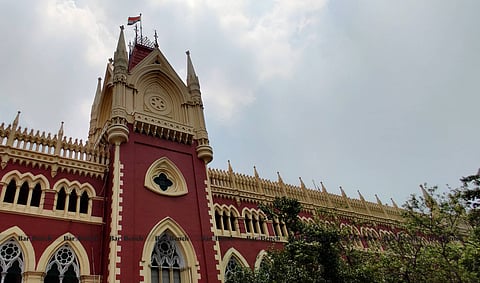
Calcutta HC grills WB Assembly Speaker on accepting rebel Trinamool MLA as Leader of Opposition

“How the Speaker sitting in chambers can decide that this is correct and this wrong? Why the House is there?" the Court asked.
Calcutta High Court
Calcutta High Court
Published on
3 min read
Listen to this article

The Calcutta High Court on Tuesday remarked that the Speaker of West Bengal Legislative Assembly appears to have been “keen” to accept the decision of rebel Trinamool Congress (TMC) MLAs to appoint their own Leader of Opposition (LoP) in the house, contrary to the party's official pick for the post.

Justice Krishna Rao also noted that the Speaker had started an inquiry into the original proposal given by the Trinamool Congress despite there not being any complaint about it at the time.

“Your Speaker has [been] very keen that, 'yes 58 [MLAs] [is] majority, I appoint', but your Speaker on 78 [MLAs] has started all the enquiries. Why it is?” the Court asked.

Justice Krishna Rao
Justice Krishna Rao

The Bench was hearing a petition filed by senior Trinamool Congress leader Sobhandeb Chattopadhyay challenging the Speaker’s decision to appoint rebel MLA Ritabrata Banerjee as the LoP in the 18th West Bengal Legislative Assembly.

As per the plea, after the Assembly election results were declared on May 4, 2026, a meeting of TMC MLAs was held on May 6. At this meeting, Chattopadhyay was nominated as the LoP. The decision was later communicated to the Speaker’s office.

The Speaker, however, called for a resolution and for the minutes of the meeting from the legislative party. The party is then stated to have held another meeting on May 19. Following that, the resolution and attendance sheet were forwarded to the Speaker.

However, the Speaker is alleged to have ignored these communications and proceeded to recognise Ritabrata Banerjee as the LoP on the basis of support allegedly extended by a rebel group of TMC MLAs.

Today, the Court asked whether the Speaker could have ignored the proposal originally given by the party.

“If the name is proposed by the majority party in the assembly, whether the Speaker can ignore that and pass any other order for appointing any other leader of opposition without any hearing on that?" the judge asked.

Senior Advocate Bilwadal Bhattacharya, representing the Speaker, submitted that the signatures given with the earlier proposal did not tally with the record maintained by the legislature.

He said that, thereafter, a complaint was made by two Trinamool members alleging that their signatures were forged.

“On the basis of that, the FIR has been registered on 27th,” Bhattacharya added.

West Bengal AAG Billwadal Bhattacharya

However, the Court said there was no complaint when the original recommendation for appointing the LoP was received.

“You got the proposal and on that day you are not having any objection with regard to that proposal. What is the duty of the Speaker once the resolution has come? The Speaker has to appoint. If any future dispute arises, the Speaker can decide in accordance with the law. So how the Speaker started the inquiry without any objection?" the Court remarked.

Bhattacharya said since there was a dispute, the Speaker took a decision only after looking into the party constitution and its established practice.

However, the Court then asked,

“If you are relying upon this complaint, this is 27th May and the correspondence is of 20th May. So you have waited for the objection?”

The Court also asked whether the Speaker was not required to give an opportunity of hearing before deciding the dispute.

“If the Speaker is having two proposals of the same party, what is the duty of the Speaker. He can suo motu recognise one, where is the rejection of earlier proposal? I am asking the procedure if you have received one proposal, even anonymous or bogus, and you are continuing ... on that and police started [investigating] and in the meantime second proposal came so what is the duty of the Speaker? He can suo motu ... or he has to decide by giving opportunity.”

The Court added,

“How the Speaker sitting in chambers can decide that this is correct and this wrong. Why the House is there?”  

The arguments in the matter will continue on tomorrow. 

Bar and Bench - Indian Legal news
www.barandbench.com