Excise policy case: CBI's 974-page petition says trial court discharge shocking, illegal; Delhi HC to hear on March 9

The plea is listed for hearing before Justice Swarana Kanta Sharma on March 9, when the High Court reopens after the Holi break.
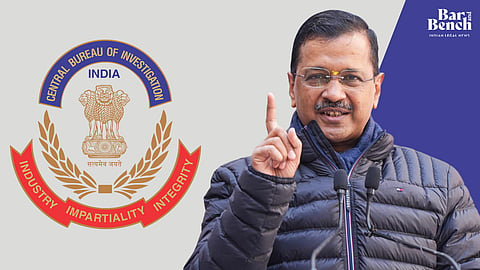
Arvind Kejriwal and CBI Logo
Arvind Kejriwal and CBI LogoKejriwal image taken from Facebook
Published on
3 min read

The Central Bureau of Investigation (CBI) has filed a revision petition running into 974 pages before the Delhi High Court challenging the trial court order discharging all 23 accused including Aam Aadmi Party (AAP) leaders Arvind Kejriwal and Manish Sisodia in connection with the Delhi excise policy case.

The plea is listed for hearing before Justice Swarana Kanta Sharma on March 9, when the High Court reopens after the Holi break.

Justice Swarana Kanta Sharma

In its criminal revision petition, the CBI has said that the order passed by Special Judge (PC Act) Jitendra Singh on February 27 is "patently illegal, perverse and suffers from errors apparent on the face".

The CBI has argued that the judge essentially conducted a mini-trial and dealt with separate limbs of conspiracy in isolation.

According to the plea,

"The Ld Special Judge has passed the impugned order on a selective reading of the prosecution case, disregarding the material showing the culpability of the accused."

Further, as per the petition, the judge's order directing departmental action against the CBI officer who investigated the case is "shocking to say the least".

Therefore, the CBI has sought a stay on the directions issued by the Court to initiate an investigation against its officer.

Further, the plea states that while making observations in the court during pronouncing the discharge order, the judge orally stated that he had spent the last four months reading only the file of the case, which shows appreciation of evidence in great details and the same is not permitted at this stage of framing of charge.

The probe agency has argued that many observations by the judge are "unduly harsh on the prosecuting agency, especially when the same are made on incorrect understanding of law and incorrect facts."

The revision plea states that the trial court erred in analysing the role of Arvind Kejriwal and Manish Sisodia.

"The Ld Special Judge has erred in not appreciating the conspectus of the conspiracy in its entirety. Such piecemeal appreciation of evidence, rather than a conjoint reading of the case, has led to the passing of the Impugned Order, which needs to be set aside," the appeal states.

CBI's revision plea has been filed through advocates Manu Mishra and Garima Saxena.

The case arose in 2022 when the CBI registered a First Information Report (FIR) alleging that the Delhi Excise Policy of 2021-22 was manipulated to facilitate monopolisation and cartelisation of liquor trade in Delhi.

The CBI case was registered on a complaint made by Lieutenant Governor VK Saxena on July 20, 2022. 

The probe agency said that the Aam Aadmi Party (AAP) and its leaders received kickbacks from liquor manufacturers due to manipulation of the policy. The Enforcement Directorate (ED) also later registered a case under the Prevention of Money Laundering Act (PMLA) in the matter.

What followed was a series of arrests of opposition leaders, criticised by some quarters as being politically motivated.

It was alleged that a criminal conspiracy was hatched by AAP leaders, including Sisodia and Kejriwal and other unidentified and unnamed private persons/entities at the stage of the policy’s formulation.

The conspiracy, it was alleged, involved loopholes “intentionally” left or created in the policy. These loopholes were allegedly meant to favour some liquor licensees and conspirators post the tender process, it was claimed.

Based on its claims, the CBI chargesheeted 23 accused.

The political leaders spent a considerable time in jail as the Rouse Avenue Court and the Delhi High Court denied them bail. It was the Supreme Court which later granted them relief.

However, the trial court on February 27 discharged all the accused in the case, holding that the prosecution case does not survive judicial scrutiny as the CBI had tried to construct a narrative of conspiracy on the basis of mere conjecture.

Hence, it ruled that the case did not merit a trial.

The special court also pulled up the CBI for building its case through approver statements.

"If such conduct is allowed, it would be a grave violation of the Constitutional principles. The conduct where an accused is granted pardon and then made an approver, his statements used to fill the gaps in the investigation/narrative and make additional people accused is wrong," the judge said.

The Court further said that it will recommend a departmental inquiry against the CBI officials who made a public servant (Kuldeep Singh) accused number one in the case.

The CBI has approached the High Court against this verdict.

CBI's revision plea has been filed through advocates Manu Mishra and Garima Saxena.

Bar and Bench - Indian Legal news
www.barandbench.com