Inhuman: Supreme Court denies anticipatory bail to Kerala professor Dr. MK Ram in Dalit student suicide case

A Bench of Justices Vikram Nath and Sandeep Mehta termed the professor's conduct as inhuman and underscored that he cannot walk away without facing consequences.
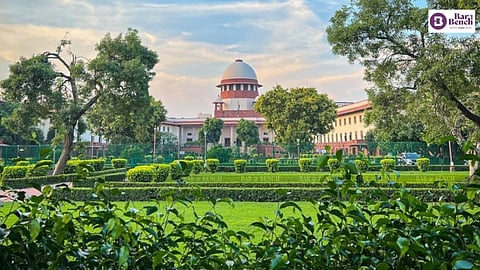
Supreme Court of India
Published on
3 min read
Listen to this article

The Supreme Court on Monday rejected the appeal filed by Kannur Dental College professor, Dr. M Kodanda Ram, who is accused of verbally harassing a Dalit student, Nithin Raj, who died by suicide in April [Dr. M Kodanda Ram v State of Kerala & ors].
A Bench of Justices Vikram Nath and Sandeep Mehta termed the professor's conduct as inhuman and underscored that he cannot walk away without facing consequences.

"Inhuman is the only word that comes to mind. How does he address the students?" the Bench demanded.

Justice Vikram Nath and Justice Sandeep Mehta
Inhuman is the only word that comes to mind. How does he address the students?
Supreme Court

Nithin Raj, a dental college student in Kerala, died by suicide on April 10 after jumping from a building near the college. Before his demise, Raj is alleged to have faced caste-based harassment from the faculty at the dental college.

Dr. Ram, the head of the department at the dental college, is the prime accused in the case. The police booked Dr. Ram and two other staff members for abetment of suicide and for offences under the Scheduled Castes and the Scheduled Tribes (Prevention of Atrocities) Act, 1989 (SC/ST Act), based on a complaint by the student's father.

Dr. Ram and another accused faculty member Dr. Sangeetha Nambiar, had earlier approached a sessions court seeking anticipatory bail.

While the sessions court granted the relief to Dr. Nambiar on April 25, it denied anticipatory bail to Dr Ram.

Ram then approached High Court which also declined to grant him relief on June 19.

This led to the appeal before the Supreme Court.

Senior Advocate Dama Seshadri Naidu, appearing for Dr. Ram, pointed out that there was a one-month time gap between the date of alleged incident between him and the deceased student and the date of suicide.

"Let us assume he humiliated in a particular day. One month later, an hour before suicide, another professor complained to the principal that he has taken a loan from an app with the professor as guarantor. He was called and reprimanded in the principal’s chamber. The incident with professor was one month ago. The loan app harassment was one hour ago (before suicide). He hasn’t said anything about caste. So SC/ST act goes away. It will have a chilling effect on professors who would like to impose some discipline," Naidu argued.

He has to realise the consequences of his actions. If a student is insulted in this way in the classroom, what will be the impact?
Supreme Court

"He has to realise the consequences of his actions. If a student is insulted in this way in the classroom, what will be the impact?" the Court asked.

"It happened one month ago," Naidu maintained.

"It was the tipping point," the Bench replied.

"He faced an allegation of taking a professor’s name showing her as guarantor. That could have compelled (to commit suicide)," Naidu said.

"That teacher can’t walk away with such kind of behaviour. A message has to go," the Bench said.

"The professor has learnt his lesson," Naidu responded.

"No question about learning lesson. We won’t ask you to read the lines (spoken by him) aloud," the Bench said referring to the words used by the professor against the student

"Something translated to English may not give the correct meaning," Naidu replied.

However, the Court refused to interfere with the High Court order and dismissed the appeal.

Bar and Bench - Indian Legal news
www.barandbench.com