

The Delhi High Court has agreed to examine whether an order passed by the Attorney General for India refusing permission to initiate criminal contempt of court proceedings can be challenged before a High Court under Article 226 of the Constitution of India [Venkatesh Vs Attorney General].
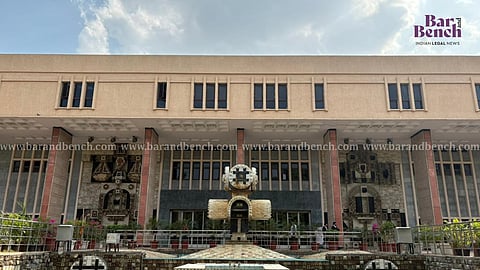
Justice Purushaindra Kumar Kaurav issued notice in a petition filed by one Venkatesh S, who has challenged a November 30, 2023, order passed by the Attorney General for India.
The case stems from a request made by Venkatesh to initiate criminal contempt of court proceedings against The Wire, LiveLaw and LiveLaw's Managing Editor Manu Sebastian over an article titled How Has the Supreme Court Fared During the Modi Years?
The article was originally published by LiveLaw and later republished by The Wire.
Venkatesh objected to portions of the article which described the Supreme Court, after five years of the Modi government, as “timid, tentative, fragmented and vulnerable” and “wary of hurting the central executive.”
In his October 20, 2023, request to the Attorney General and Solicitor General, Venkatesh alleged that such remarks were scandalous, denigrated the Supreme Court and lowered the authority of the Court.
He also claimed that since the article remained available online, the alleged contempt was continuing in nature despite the article having first been published in April 2019.
However, the Attorney General refused to give his consent to initiate contempt of court proceedings in the matter.
Under Section 15 of the Contempt of Courts Act, the consent of the Attorney General or Solicitor General is required in certain cases before criminal contempt of court proceedings can be initiated before the Supreme Court.
In the present case, the petitioner has challenged the Attorney General’s refusal to grant such permission.
In his order, Attorney General R Venkataramani (AG) said that he had gone through the request and the article. He noted that the article presented a particular perspective on the role of the judiciary and the executive. He further said that such perspectives can likely be brought within the scope of free speech.
The AG also observed that criminal contempt has far-reaching consequences, particularly in the context of freedom of speech and expression. Therefore, contempt jurisdiction can be invoked only in clear cases of deliberate and wilful contumacious conduct, he said.
He concluded that the article did not fall within the scope of criminal contempt under Section 15 of the Contempt of Courts Act, 1971.
Venkatesh then moved the Delhi High Court, challenging this refusal.
The case raised two issues. The first is whether the Attorney General’s opinion refusing consent to file criminal contempt proceedings under Section 15 of the Contempt of Courts Act, 1971 is amenable to judicial review under Article 226.
The second is whether the article in question requires criminal contempt of court action.
In its May 13 order, the High Court recorded that Additional Solicitor General Chetan Sharma had placed a note for its consideration. After perusing the note, the Court observed that there appeared to be divergent opinions of different High Courts on the first issue.
“The matter, thus, requires consideration,” the Court said.
The matter will be heard next on September 29, 2026.
The petitioner, Venkatesh S, appeared in person.
The Attorney General was represented Advocates Rukhmini Bobde, Amit Gupta, Saurabh Tripathi, Shubham Sharma, Urja Pandey, Vinayak Aren and Aishwarya Nigam.
[Read Order]