

The Supreme Court on Thursday upheld the Indian revenue authorities' refusal to entertain Tiger Global entities’ advance ruling applications arising from the sale of shares they had acquired in Flipkart. [Authority of Advanced Ruling v. Tiger Global]
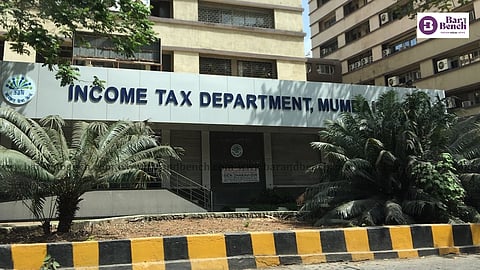
A Bench of Justices JB Pardiwala and R Mahadevan ruled that once a transaction is found to be prima facie designed for avoidance of income tax, the statutory bar under the proviso to Section 245R(2) of the Income Tax Act, 1961 applies and that tax authorities are not required to examine the merits of taxability.
A copy of the judgment is yet to made available.
The dispute originated from investments made by three Mauritius-incorporated investment holding companies - Tiger Global International II, III, and IV Holdings - into Flipkart Private Limited, a Singapore-based company. These entities acquired their shares in Flipkart Singapore between October 2011 and April 2015.
In May 2018, Walmart entered into a share purchase agreement to acquire a controlling stake in Flipkart Singapore for approximately $16 billion. The Tiger Global entities sold their holdings as part of this transaction and sought a "nil" withholding tax certificate from Indian authorities. They argued that because their shares were acquired before April 1, 2017, the gains were exempt from Indian capital gains tax under the "grandfathering" clause of the India-Mauritius double taxation avoidance agreement (DTAA).
The Indian Revenue Department and the Authority for Advance Ruling (AAR) rejected this claim in 2020. The AAR labeled the Mauritius firms "conduit companies" and "puppets," asserting that the real control lay with Tiger Global Management (TGM) LLC in the United States. It concluded that the structure was prima facie designed for tax avoidance.
The Delhi High Court quashed the AAR's order, which led to an appeal in the Supreme Court.
Allowing the revenue’s appeals, the Supreme Court disagreed with the High Court and upheld the AAR’s refusal. The Court held that the statutory scheme expressly bars advance rulings where a transaction appears to be designed for tax avoidance and that the AAR had not exceeded its jurisdiction in invoking the threshold bar.
Rejecting the argument that treaty eligibility itself negates tax avoidance, the Court held:
“Once taxability has been established on the basis that the shares sold derived their value from assets in India, the inquiry cannot be diverted merely because the shares transferred were not of an Indian company.”
The Court further held that treaty interpretation must align with legislative intent and subsequent statutory amendments introduced to curb abuse.
“Undoubtedly, the mere holding of a TRC cannot by itself prevent an inquiry subsequent to the amendments brought into the statute, particularly by the introduction of Section 90(2A) and Chapter X-A…if it is established that the interposed entity was a device to avoid tax.”
In a concurring opinion, Justice Pardiwala placed strong emphasis on tax sovereignty, describing the power to tax income arising within India as an inherent sovereign function.
"Taxing an income arising out of its own country is an inherent sovereign right of that country. Any dilution of this power through artificial arrangements is a direct threat to its sovereignty and long-term national interest.”
Highlighting the growing importance of economic sovereignty in a globalised world, he observed:
“In the present era of geo-economic uncertainty, prudence demands that tax sovereignty be retained rather than yielded.”
The judge noted that the ruling would be closely watched internationally and described it as a significant moment in India’s tax jurisprudence.
Holding that the revenue had established, at least prima facie, that the Tiger Global transactions were impermissible tax avoidance arrangements, the Supreme Court allowed the appeals and set aside the Delhi High Court’s judgment.
It held that capital gains arising from share transfers effected after April 1, 2017 are taxable in India under the Income Tax Act read with the applicable DTAA provisions.
The revenue was represented by Additional Solicitor General N Venkataraman.
Tiger Global was represented by Senior Advocates Porus Kaka and Harish Salve.