
Subscribe
Subscribe
- Latest Legal News
- News
- Law Firms
- Columns
- Interviews
- Law School
- Legal Jobs
- हिंदी
- ಕನ್ನಡ
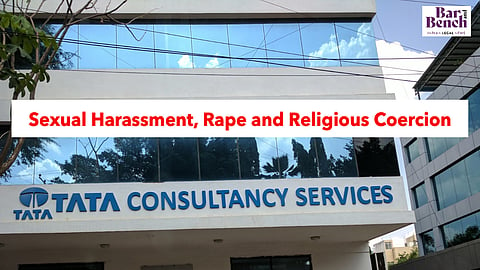
A Nashik court recently granted bail to Nida Khan, accused in the Tata Consultancy Services (TCS) Nashik BPO sexual harassment and religious coercion case, citing her pregnancy and the social stigma attached to the child if born in prison [Nida Khan v. State of Maharashtra & Anr].
Such a situation is not something that anyone can bear particularly when the welfare of an unborn child is involved, the Court said.
In his order passed on July 6, Additional Sessions Judge KG Joshi said judicial discretion must be exercised to spare the five-month-pregnant Nida Khan such a painful situation.
“The trauma of taking birth in prison like Lord Krishna or the social stigma attached to it is not something that anyone can bear. In order to avoid such a painful situation and to welcome the newborn baby and the overall welfare, it would be just and proper to exercise judicial discretion in favour of the applicant accused,” the Court observed.
It further noted that the investigation was complete and the chargesheet had been filed, diminishing the need for further custody.
“There is no pending seizure or discovery of any property. The prosecution has not sought her custody for further investigation. No purpose will be served by keeping the applicant in jail,” the judge held in the 10-page order.
On the allegations of forced conversion, the Court found prima facie material indicating Khan’s involvement, but clarified that the evidence must be tested at trial.
The Nashik Police registered an FIR against Khan and seven other employees of TCS’s Nashik office under the Bharatiya Nyaya Sanhita for offences including sexual harassment and hurting religious sentiments, along with provisions of the Scheduled Castes and Scheduled Tribes (Prevention of Atrocities) Act.
The FIR named Khan, along with co-accused Danish Shaikh and Tausif Attar, for conspiring to influence the complainant to convert and hurt her religious sentiments.
Khan allegedly provided a burqa, shared religious material, installed Islamic applications on the complainant’s phone, and visited her home to impart religious practices.
Investigators also alleged a broader conversion plan supported by digital evidence and witness statements.
Special Public Prosecutor Ajay Misar opposed the plea warning of risk of evidence tampering, witness intimidation and emotional coercion.
Khan’s counsel Rahul Kasliwal argued that the charges were exaggerated and legally untenable. He submitted that she was falsely implicated in allegations of sexual offences that did not apply to her.
He also contended that Maharashtra has no law criminalising religious conversion. At most, he argued, the case discloses a lesser offence for which bail is permissible.
After considering the arguments raised by both parties, the Court granted bail on July 6 on a personal bond of ₹75,000 with a solvent surety, along with conditions restricting contact with the complainant, entry into certain areas and foreign travel.
A day later, it modified the order to permit provisional cash security of ₹50,000 for four weeks, subject to furnishing a surety thereafter.