
Subscribe
Subscribe
- Latest Legal News
- News
- Law Firms
- Columns
- Interviews
- Law School
- Legal Jobs
- हिंदी
- ಕನ್ನಡ
In India, people have long been influenced by celebrities, ranging from copying their dressing styles to emulating their mannerisms and speech. In such a landscape, a celebrity’s demeanour, iconic dialogues and other distinctive attributes often become the subject of merchandising, parody and other forms of creative or commercial use. While some of these uses fall within legitimate artistic expression, others amount to unauthorised commercial exploitation.
With the rise of social media, e-commerce and emerging technologies, the commercial value of celebrity persona has increased significantly, leading to a surge in disputes relating to the misuse of names, images and other identifiable traits. In the absence of a specific statutory framework, Indian courts have developed the concept of personality rights through constitutional principles, passing off and trademark jurisprudence, while attempting to strike a balance between individual rights and freedom of expression. In this context, personality rights may be defined as the legal rights of an individual to control the commercial or non-commercial use of their identity or personal attributes, protecting them from unauthorised exploitation of elements uniquely associated with and identifiable to the individual.
The foundation of personality rights can be traced to the constitutional recognition of the right to privacy under Article 21 of the Indian Constitution. While the terminology of “personality rights” was not expressly recognised in early jurisprudence, courts acknowledged an individual’s right to be let alone.
In R Rajagopal v. State of Tamil Nadu (popularly known as the Auto Shankar case), the Supreme Court held that the unauthorised publication of a person’s life story without consent amounts to a violation of privacy, except where such information forms part of public records. This decision laid the groundwork for recognising an individual’s control over their identity and personal attributes and marked a significant shift towards preventing the economic exploitation of personal autonomy.
The concept of personality rights took a more concrete shape when courts began addressing the commercial exploitation of celebrity identity. In ICC Development (International) Ltd. v. Arvee Enterprises, the Delhi High Court recognised that the right of publicity flows from the right to privacy and vests in an individual, not in an event organiser. The Court clarified that while public interest may justify reporting, unauthorised commercial exploitation is impermissible.
This reasoning was further developed in DM Entertainment Pvt. Ltd. v. Baby Gift House, where the Delhi High Court restrained the sale of dolls resembling singer Daler Mehndi. The Court expressly acknowledged the right of publicity, holding that a celebrity has the exclusive right to commercially exploit their persona and prevent unauthorised use that misleads consumers.
Indian courts subsequently expanded protection beyond name and photograph to include distinctive attributes such as voice, style and mannerisms. In Titan Industries Ltd. v. Ramkumar Jewellers, the Delhi High Court held that unauthorised use of celebrity images in advertising amounted to passing off and violated personality rights, where the celebrity had not endorsed the product.
Similarly, in Shivaji Rao Gaekwad v. Varsha Productions, the Madras High Court restrained the use of Rajinikanth’s name, image and style in a film title and promotional material, recognising that his persona had acquired a unique commercial identity deserving protection.
With the growth of the internet, social media and digital marketplaces, courts have been increasingly proactive in granting interim relief.
In the case of actor, Mr. Amitabh Bachchan v. Rajat Negi & Ors., the Court issued an order restraining the defendant, including unknown defendants, from infringing Mr. Bachchan’s personality rights or celebrity rights by misusing his name, likeness, photograph, voice and other personality traits and attributes, for commercial gain.
A similar case was filed by Bollywood actor, Mr. Anil Kapoor. Titled as Anil Kapoor v. Simply Life India & Ors., this was filed against 21 defendants for unauthorised usage of his popular dialogue “Jhakas”. According to the plaintiff, each of the 21 defendants were using different aspects of his personality. The Court recognized the threat of exploitation using technology and upheld his personal rights as a celebrity.
More recently various celebrities have approached the Courts in India to get their personality rights protected. Some instances are enunciated below:
One of such cases is Jaikishan Kakubhai Saraf alias Jackie Shroff v. The Peppy Store & Ors., wherein a famous Bollywood actor Mr. Jackie shroff had alleged that certain catchphrases and his name, which includes (Bhidu, Bhidu ka Khopcha, Jackie Shroff), for which he had filed trademark applications, were being used for financial gains by others without his authorization. Mr. Shroff’s right to control the commercial use of his persona was upheld by the Courts and he was granted relief against the said infringement of his personality rights.
In another case of Aishwarya Rai Bachchan v. Aishwaryaworld.com, Mrs. Aishwarya Rai Bachchan filed a petition against the defendant, who was hosting a website with her name and was selling merchandise with her name and other personality traits on it. The Delhi High Court ordered the takedown of unauthorized content and interim protection of her personality rights.
Mr. Salman Khan also recently filed a case, i.e., Salman Khan v. Ashok Kumar/John Doe & Ors. for the enforcement of his personality rights and relief against the misuse of Salman Khan’s likeness and identity on social platforms and marketplaces. The Court, in turn, directed social media platforms to act and treat the petition as a formal complaint under Information and Technology (Intermediary Guidelines and Digital Media Ethics Code) Rules, 2021 (“intermediary rules”).
The personality rights are not limited to Bollywood actors alone but also extend to sportsmen or sportswomen. One example of it is the case of Sunil Gavaskar v. Online Platforms, wherein the legendary sportsperson had approached the Delhi High Court for the protection of his personality rights. The Court directed the social media intermediaries to treat Sunil Gavaskar’s suit as a complaint under the aforementioned intermediary rules and take necessary steps within seven days.
From the southern part of India, actors like Mr. Nagarjuna Akkineni and Mr. Ilaiyaraaja have also approached the Courts in Delhi and Madras, respectively, for the protection of their personality rights. In the case of Mr. Nagarjuna Akkineni, the Delhi High Court has passed an interim order protecting the Telugu actor's personality and publicity rights and restraining the unauthorized use of his name, image, voice or other aspects of his persona for commercial gain without his consent. In Mr. Illaiyaraaja’s case, the Madras High Court issued an interim injunction prohibiting the use of his AI-generated images and other identity markers without permission.
Apart from the cases detailed above, the Delhi High Court has also granted protections in matters of Abhishek Bachchan v. Bollywood Tee Shop, Karan Johar v. India Pride Advisory (P) Ltd and Ravi Shankar’s case against deepfakes, AI videos and misleading endorsements.
The jurisprudence surrounding personality rights in India has evolved from a narrow conception of privacy to a broader recognition of identity as a protectable legal and commercial interest. Through judicial interpretation of constitutional principles, passing off and trademark law, Indian courts have acknowledged that a person’s name, image, voice, mannerisms and other distinctive attributes are not merely personal facets but valuable identifiers capable of misuse in the commercial sphere.
Recent judicial trends reflect an increased awareness of the challenges posed by the digital economy. The proliferation of social media platforms, e-commerce marketplaces, artificial intelligence tools and deepfake technology has significantly amplified the scale and speed at which celebrity personas can be misappropriated. Courts have responded by granting prompt and expansive interim relief, and by placing obligations on intermediaries to act against infringing content. This marks a decisive shift towards proactive enforcement and underscores the judiciary’s attempt to ensure that personality rights remain effective in a rapidly evolving technological landscape.
However, the absence of a comprehensive statutory framework has resulted in a fragmented and often ad hoc approach, with the scope and contours of personality rights being determined on a case-by-case basis. The lack of clearly articulated standards distinguishing permissible expressive or referential use from impermissible commercial exploitation continues to generate uncertainty for content creators, advertisers and platforms alike.
Further, the increasing tendency to grant broad, omnibus injunctions raises concerns of overreach. While such orders are effective in curbing commercial misuse, they also carry the risk of encroaching upon constitutionally protected freedoms such as artistic expression, parody and satire. Without clearly defined boundaries, personality rights may be enforced in a manner that prioritises private economic interests at the cost of public discourse and creative freedom.
In conclusion, while personality rights in India have attained a degree of doctrinal maturity and judicial acceptance, their continued expansion through judicial intervention alone may lead to inconsistency and unpredictability. There is an evident need for legislative clarity to delineate the scope, limitations and enforcement mechanisms governing personality rights, particularly in the context of digital and technological exploitation. Until such clarity is achieved, Indian courts will continue to play a pivotal role in shaping this evolving doctrine, tasked with the delicate balance of safeguarding individual identity while preserving freedom of expression and public interest.
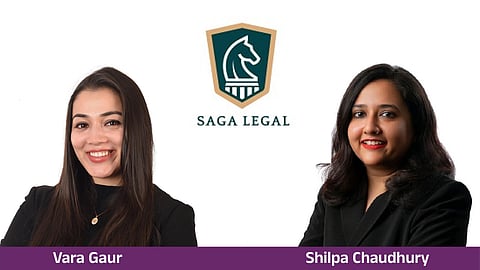
About the authors: Vara Gaur is a Partner and Shilpa Chaudhury is a Principal Associate at Saga Legal.
Disclaimer: The opinions expressed in this article are those of the author(s). The opinions presented do not necessarily reflect the views of Bar & Bench.
If you would like your Deals, Columns, Press Releases to be published on Bar & Bench, please fill in the form available here.