Gujarat HC warns motor accident tribunals to be wary of "ready to use" disability certificates in insurance cases

The Court observed that there are doctors who are willing to give "ready to use" disability certificates even without medically examining the person who is claiming to suffer from such disability.
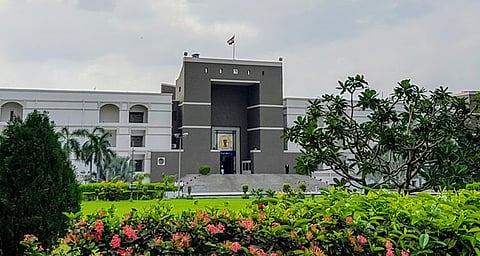
Gujarat High Court
Gujarat High Court
Published on
3 min read

The Gujarat High Court recently held Motor Accident Claims Tribunals (MACT) cannot rely on disability certificates in accident compensation cases without carefully examining their authenticity.
Justice Hasmukh D Suthar observed that there are doctors who are willing to give "ready to use" disability certificates even without medically examining the person who seeks to make use of the certificate to claim compensation.

In this regard, the High Court referred to earlier Supreme Court decision in Raj Kumar v. Ajay Kumar, wherein the top court had noted that there were unscrupulous doctors who are willing to give disability certificates without proper medical assessment.

The High Court proceeded to underscore that motor accident compensation tribunals must take an active role when disability certificates are produced on record.

"When 'ready to use' Disability Certificate is produced on record at that time the learned Tribunal cannot sit as a mute spectator and the Tribunal has directive role in the decision making process," stated the Court in its March 3 order.

Justice Hasmukh D Suthar

The Court further noted while compensation proceedings under the Motor Vehicles Act, 1988 (compensation to victims of road accidents) are intended to assist injured persons, the system may also be misused.

"It is true that the Motor Vehicles Act is a benevolent legislation and the benefits of such benevolent provision and compensation granted under the Act is required to be reached to the actual sufferer or the needy claimant but many times the benevolent legislation being misused and abused by unscrupulous elements and sometime concocted record or medical documents are also produced on the record."

The Court made the observation while allowing a petition by Tata AIG General Insurance Co. Ltd. It set aside an MACT order that had rejected the insurer’s request for the medical reassessment of a claimant’s disability.

The case arose from a motor accident compensation claim filed before the MACT at Godhra in 2017.

The claimant submitted that he sustained serious injuries to his right hand and underwent surgery that included amputation of the index finger and removal of certain hand bones. A disability certificate produced in the MACT proceedings assessed the claimant's disability at 90 per cent.

The insurance company, however, countered that the disability certificate had been issued by a doctor who had not treated the injured person. It, therefore, sought a direction for the claimant's reassessment by a District Medical Board.

The MACT rejected the request in September 2024, following which the insurer approached the High Court.

The High Court held that the tribunal should adopt a cautious approach before accepting the disability certificate.

"Mere production of the Disability Certificate or Discharge Certificate is not the proof of the physical or functional disablement," said the Court.

Explaining the distinction between medical disability and its legal consequences, the Court said compensation must be assessed based on “functional disability” (the effect of the injury on a person’s earning capacity).

"The Tribunal must have to consider functional disablement with reference to the impact of the injury on the claimant overall earning capacity and not merely on his inability to continue the same avocation," it added.

The Court also noted concerns regarding the issue of disability certificates by doctors who had not treated the injured person.

"It is true that, in many cases the Disability Certificate issued by the Doctor who has not treated the victim and exorbitant disablement is opined without any reference book or any specific guidelines," it said.

Ultimately, the High Court set aside the MACT’s order rejecting the request for the claimant's medical reassessment.

The Court directed that the insurance company may apply before the tribunal for a direction requiring the claimant to appear before a District Medical Board for evaluation of the claimant's disability.

The Court also observed that if the claimant fails to appear before the medical board despite such a direction, the tribunal may draw an adverse inference (a negative conclusion based on refusal to comply) while deciding the compensation claim.

Advocate Kriti S Pathak appeared for TATA AIG General Insurance Company Limited.

[Read Order]

Attachment
PDF
Tata AIG General Insurance Co. Ltd. v. Sunil Ishwarbhai Panchal & Ors
Preview
Bar and Bench - Indian Legal news
www.barandbench.com